
Indigenous Bullshit
History Doesn't Care Who Got Here First

When the dust settles hundreds of years from now and people begin to assess the hows and whys of Western decline, the issue of colonialism will figure prominently.
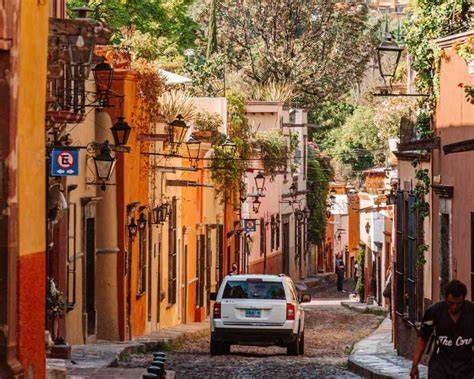
We are traveling from Mexico City to San Miguel de Allende with “The Professor,” a San Miguel resident who makes extra money by driving tourists from Mexico City to San Miguel. The title of professor is honorary. He is a self-taught scholar, a writer, and a highly intelligent man who works odd jobs around San Miguel to earn a living. The Professor is sharing tales of the Aztec Empire with us as we drive northward, stopped only briefly by the friendly Mexican police who take their usual bribe of around $200 as insurance against being arrested for more serious crimes, real or fictitious.
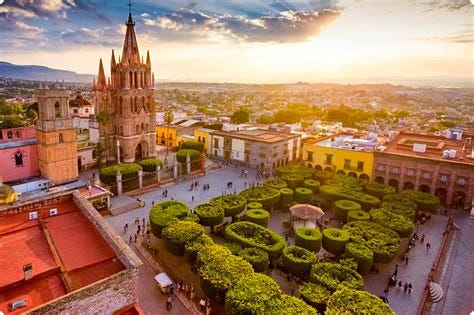
The Professor goes on to tell us that all the horrible atrocities allegedly committed by the Aztecs were lies, all lies. Native American culture is burned into the mental DNA of Central Mexico. Children assemble on holidays dressed like little Aztec warriors for parades. There is pride in their Aztec heritage.
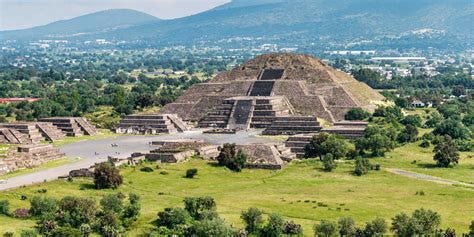
On the way back, we stop to see the pyramids outside Mexico City, and The Professor is full of information about this fascinating culture. He describes their innovation, tremendous power, and unrivaled legacy. The Professor is a proud man.
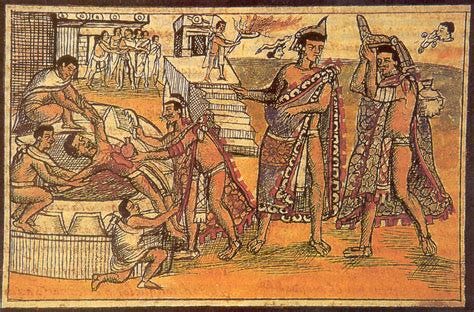
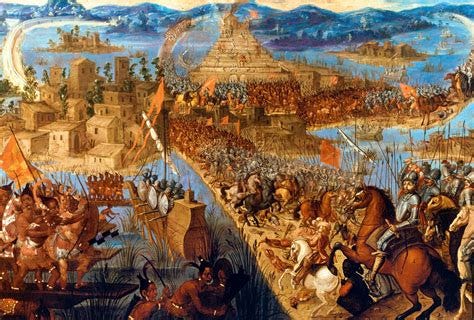
But despite my enormous respect for The Professor, the stories about the Aztecs are not lies. The Aztecs believed that the gods had sacrificed themselves to create the world and that, out of necessity, human blood was required to keep the sun moving across the sky. Human and animal sacrifice have been elemental features of nature religions throughout history. The harvest required blood.
The Aztecs sacrificed prisoners of war in religious ceremonies. The prisoners were led to the tops of temple pyramids, held down by priests, and had their hearts cut out while still alive. Their bodies were then strewn down the steps of the pyramid, the bloodier the spectacle the better. Archaeological studies at sites such as Templo Mayor have uncovered racks of human skulls known as tzompantli. Human sacrifice was one of the things that made the empire go, alongside continual military conquest and tribute extraction. Subject peoples were required to provide food, textiles, luxury goods, labor, and, when the priests ran out of bodies, sacrificial victims. The Aztecs were so hated that many indigenous groups allied themselves with the Spaniards.
The Mayans also get a bit of a pass. They are remembered for their astronomy, mathematics, writing system, and cities, but not nearly as much for their human sacrifice, torture, and public humiliation of victims. Ritual killings were common, and murder was infused with religious meaning and legitimacy.
There is an awful lot of emphasis on the atrocities of the Spanish conquerors, and there should be. The conquistadores were not such nice guys either. But for all the talk about colonialism, few dare to examine it thoughtfully. Contrary to what they may believe over at Barnard or Smith College, fighting colonialism does not consist of wearing a mask into Philz Coffee. History shows that colonialism is not good or bad in the abstract, any more than all indigenous populations were terrific people who deserved to remain in power forever.
The coffee-shop view of colonialism assumes that moral legitimacy flows automatically from historical priority. We are told that people who arrived first possess a uniquely valid claim to the land and that later arrivals are forever burdened by a kind of original sin. Arguments about ownership in the Middle East, Africa, Asia, and the Americas frequently revolve around the endlessly repeated question of who was there first. To which I say, is this the real question?
Human history is not a story of static populations peacefully occupying fixed territories. Human history is a bloody mess. It is a story of migration, conquest, assimilation, intermarriage, commerce, shifting alliances, and conflict. Before one group was there, another was there. And before them, another. The idea of an original owner is neither logical nor provable.
The notion that being “here first” creates a permanent political entitlement does not survive even minimal scrutiny. If first possession establishes political sovereignty, then every modern nation on earth is illegitimate. Every border, kingdom, republic, and civilization would need to defend itself against claims arising from earlier migrations and forgotten peoples.
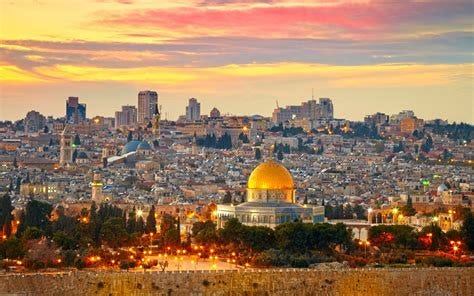
Equally false are theological and mystical claims to land. In Israel today, three different religions claim rights to the same patch of desert based upon the authority of their holy books. Throughout history, religions have invoked divine authority to invade neighboring lands, expel inhabitants, and wage war. Whether the justification comes from Manifest Destiny, the Torah, the Talmud, the Koran, or some other sacred source, the underlying claim is essentially the same. And it is nonsense.
The more important question is not who was here first. The more important question is who governs well. I submit that political legitimacy is derived from creating conditions in which human beings can flourish. Legitimacy is established through justice, the protection of liberty, the maintenance of order and safety, the safeguarding of property, the encouragement of opportunity, and the principle that rulers themselves are subject to law.
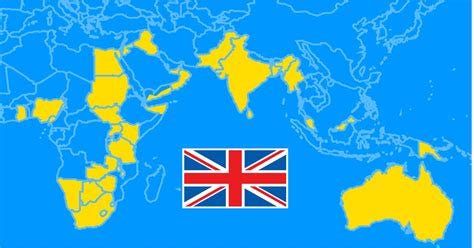
Today’s discussions of colonialism often condemn it as a single phenomenon. Yet colonial ventures—and indigenous governments—varied enormously. Some colonial regimes were exploitative and destructive. Others introduced institutions that became the foundation of later prosperity. Most contained elements of both.
Some colonial regimes, like Great Britain in many instances, created railroads, ports, courts, universities, modern medicine, commercial systems, property rights, and civil administration. Historical analysis requires attention to actual results rather than slogans.

Under British administration, Hong Kong evolved from a relatively modest trading settlement into one of the world’s most prosperous financial centers. The British were not perfect, since they were, after all, British. But, they created opportunities for millions of people over the century or so they were in power. Then the indigenous Chinese government came into power, bringing its usual basket of fun.
Beijing imposed the National Security Law in 2020. Hong Kong went from one of the freest and most prosperous cities in Asia to a place where political dissent can land you in prison. Independent newspapers were shut down, activists jailed, elections restructured, and civic organizations dissolved. But don’t worry, because it was indigenous.
Singapore followed a different path. The British established a major international port, a functioning legal system, English-language administration, and commercial institutions. Singapore’s leaders built upon those foundations rather than dismantling them. The result was one of the most remarkable economic transformations in modern history. Today Singapore is one of the safest, wealthiest, and most efficiently governed societies in the world. They built upon foundations laid by the evil colonizers.

Then there is India. British rule was far from one big tea party. Nevertheless, modern India inherited a nationwide civil service, a common-law legal system, rail networks, universities, administrative structures, and commercial institutions that continue to play important roles today. The British made considerable damage, the most lasting of which may be the Indian fascination with cricket, a hideous and boring game, along with the equally annoying habit of taking tea in the middle of the game.

So not all colonial empires are created equal. And now, we should also point out, not all indigenous cultures are created equal. There are many examples, including recent ones, of governments that enjoyed broad cultural support before delivering poverty, repression, corruption, economic stagnation, and the suppression of civil liberties. Cuba, Venezuela, and many African nations come readily to mind.
This confidence in indigenous culture is often paired with the equally dubious assumption that all cultures are equal in their outcomes. Sorry, despite what your anthropology professor told you, all cultures are not equal. Some encourage innovation, literacy, accountability, and economic development. Some protect women, minorities, and dissenters. Some cultivate the peaceful transfer of power. Others normalize violence, patronage, corruption, and disregard for human rights.
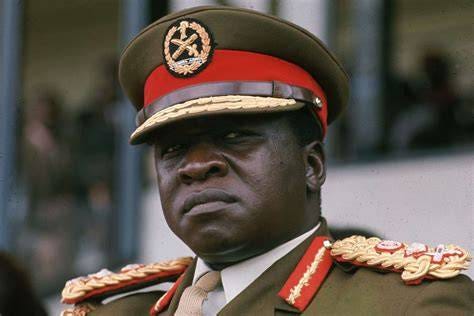
Zimbabwe under Robert Mugabe was indigenous. He imposed political repression, economic mismanagement, hyperinflation, and destroyed the agricultural sector. He was handed the ball on the five-yard line and fumbled it. Idi Amin was indigenous. His regime became notorious for brutality and persecution. South Africa today has an indigenous government. So does Mexico. The fact that leaders share ancestry with the people they govern tells us nothing about whether they govern wisely.
And what about us? How much comfort should we take from the fact that our own political class is homegrown? Does it make endless debt, endless wars, corruption, and institutional decline more acceptable because the people responsible were born here?
History is not sentimental. It does not care who arrived first, whose ancestors crossed a particular river, or whose holy book claims title to a patch of ground. History does not award virtue based upon genealogy, ethnicity, race, religion, or indigeneity. It asks a far more practical question: What did you do with the place once you got it?
Did you create liberty or oppression? Prosperity or poverty? Justice or corruption? Did ordinary people have the opportunity to build families, businesses, communities, and meaningful lives? Were rulers constrained by law, or did they become laws unto themselves? Did your institutions survive your leaders, or did everything collapse into tribalism, violence, and decay?
That is how civilizations are judged. Rome is not remembered because Romans got there first. Britain is not remembered because Britons got there first. America will not be remembered because Americans got here first. They will be remembered for what they built, what they preserved, what they destroyed, and whether they expanded or diminished the possibilities of human flourishing.
In the end, legitimacy is not inherited. It is earned. It does not arise from ancestry, mythology, chronology, or blood. It arises from competence, justice, liberty, opportunity, and the rule of law. The question is not who was here first. The question has always been, and will always be, who governs well.
As expected I have received a number of nasty grams from folks who are claiming that we colonizers are engaged in empty rationalization. In any event, I want to applaud those folks for running down the prior inhabitants of their existing dwelling to hand over their possessions to their descendants. Be sure to explain to them how the pool heater works before you leave.
The Aztec themselves were, by all current metrics, “colonizers”. They were foreign invaders to the tribes who lived around lake Texcoco, subjugating and slaughtering as their influence and power grew.