

There seems to be genuine bewilderment in the publishing industry as to why male readers would rather read the instructions on an airplane barf bag than a novel from the “Manager’s Selection” at Barnes & Noble. It’s a genuine mystery why male readers weren’t anxiously digging into The Lesbiana’s Guide to Catholic School over the summer. The story of a 16-year-old’s struggle with lesbianism, at a time when it seems that half of Gen Z has declared itself either gay, lesbian, bisexual, or of equivocal sexuality, is a story that just has to be told. I mean, who ever heard of a lesbian nun or a gay priest? It’s so utterly novel that you would find a homosexual in the Roman Catholic Church. I am certain that there were no worthier candidates than this for recognition as a finalist for the National Book Award.
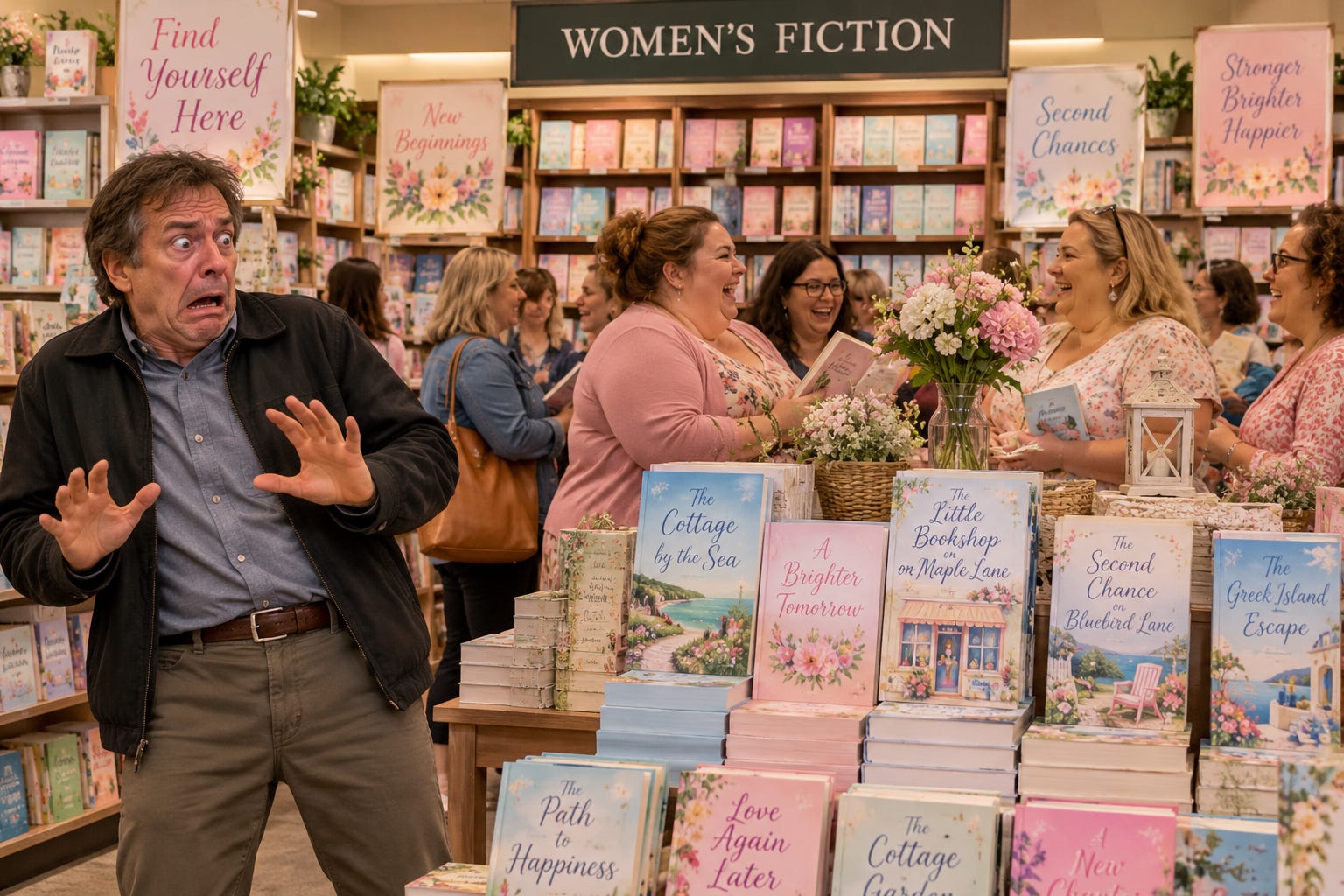
Walking into a Barnes & Noble brings a familiar feeling of nausea to the male shopper. It is the same feeling I had when our 78-year-old public junior high school teacher taught The Red Badge of Courage in a style guaranteed not only to make us hate all literature, but to regret having become literate at all.
First, there is the Great Wall of Pastel: pink, turquoise, lavender, sea-foam green, with flowers climbing around titles written in cursive. Look over there and you’ll see the woman facing the ocean, next to a cottage or a vineyard—or some other place to which she has fled after discovering that her marriage was an oppressive patriarchal institution because her husband asked her what was for dinner on consecutive Tuesdays.
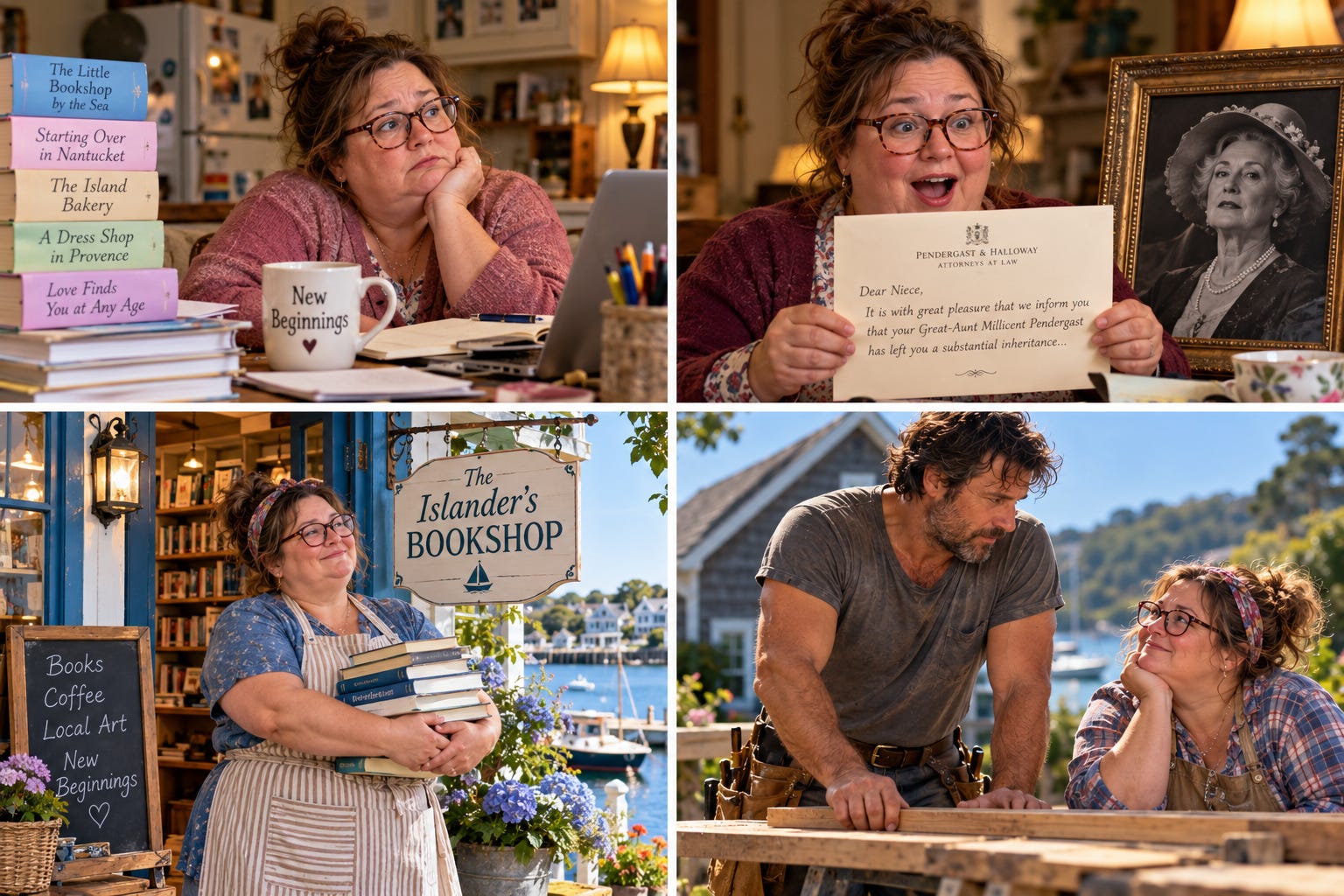
There are all sorts of creative variations on the story. She opens a bookshop, a dress shop, a bakery, or an inn on a Greek island or Nantucket. Maybe a distant aunt dies—Great-Aunt Millicent Pendergast—and leaves a fortune to the heroine because she once saw a spark in her as a little girl. The narrative is flowery and nauseating and full of feeling and description. Or perhaps she returns to the town she swore she would never return to and meets a rugged carpenter who is tortured but secretly wealthy and has chosen to work with his hands because money never brought him happiness.
By page 287, she discovers that she has been living for everyone but herself and has finally liberated herself from the horrible oppression of patriarchal submission.
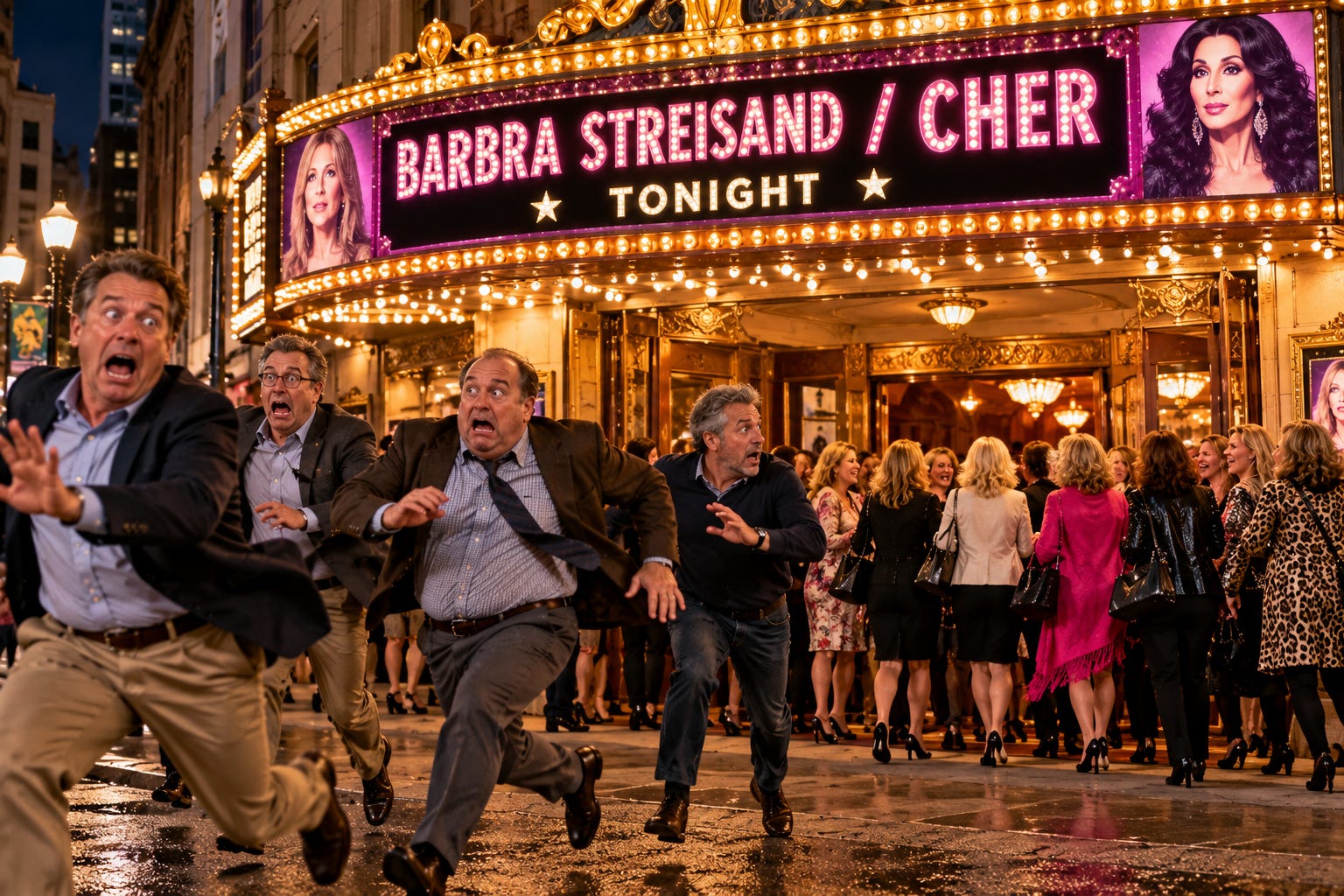
It is truly baffling why men have gasped in horror at American fiction in much the same manner they would at the announcement of a Streisand-Cher double bill. I finally walked through the fiction section of Barnes & Noble some time ago and decided that I would rather be waterboarded than spend another minute there.
The American publishing industry just can’t figure out why half the world’s population has stopped reading fiction. According to the National Endowment for the Arts, only 27.7 percent of American men reported having read a novel or short story in calendar year 2022. The number for women was closer to 50 percent. Men are no doubt proud of the fact that nearly three-quarters of American men managed to make it through the entire year without reading a work of fiction.
American publishing executives wouldn’t know how to evaluate fiction that might appeal to a man if they were threatened with being dropped in acid. In 2023, women constituted nearly 78 percent of respondents working in publishing, while men constituted about 18 percent. Among the newest generation entering the business, Publishers Weekly reported that, among people who had been in the industry for five years or less, 77 percent were female and 12 percent were male. The magazine business is similarly lopsided.
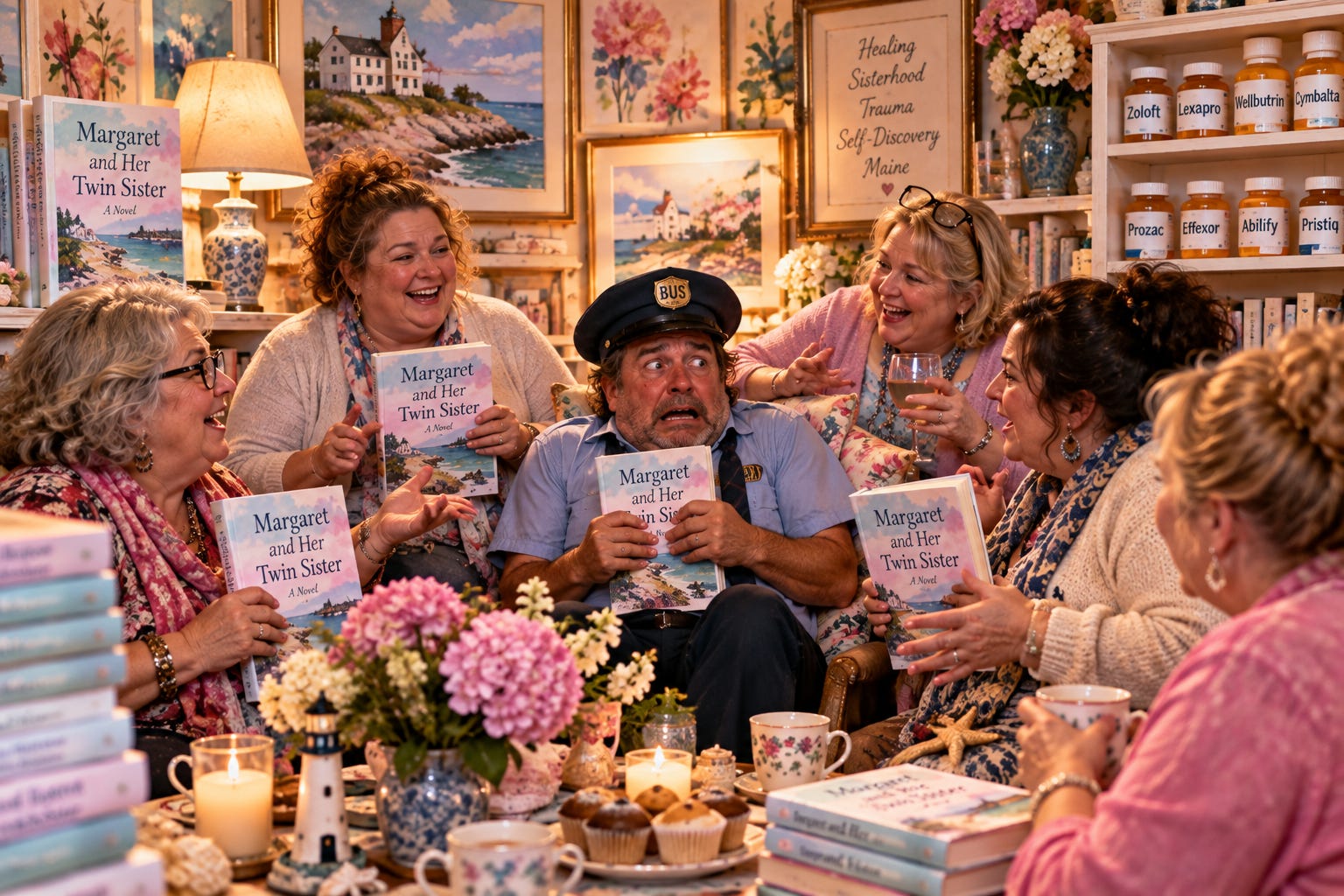
Yet it remains a mystery why so many men despise modern fiction. Sid the bus driver is apparently dying to catch up on the story of Margaret and her twin sister, who have experienced inherited trauma from the summer they spent at their grandmother’s house in Maine. Not only do men not want to read this bullshit, but we have nightmares about being locked in a room surrounded by watercolor paintings, flowers, chubby women engaged in earnest conversation, and shelves of antidepressants.
I am sure there are plenty of good female writers out there. It’s unlikely that many of them are being published, but they must be out there somewhere. Perhaps they go unpublished because there is a serious danger that their writing might appeal to readers of both sexes, rather than functioning as literary kryptonite to men.
In fact, there used to be a time when novelists wrote books to be read by men and women, and it was largely irrelevant whether the protagonist was male or female. Millions of men have read Tolstoy, Dostoevsky, and Jane Austen. Varvara Petrovna Stavrogina in The Possessed is one of the great female characters in literature. Millions of men have read Gone with the Wind.
The list of great female characters appreciated by male readers is long: Lady Brett Ashley in The Sun Also Rises, Grushenka in The Brothers Karamazov, Nastasya Filippovna in The Idiot, Molly Bloom in Ulysses, Catherine Barkley in A Farewell to Arms, Jordan Baker in The Great Gatsby, Carrie Meeber in Sister Carrie, and Miss Havisham in Great Expectations. The list goes on.
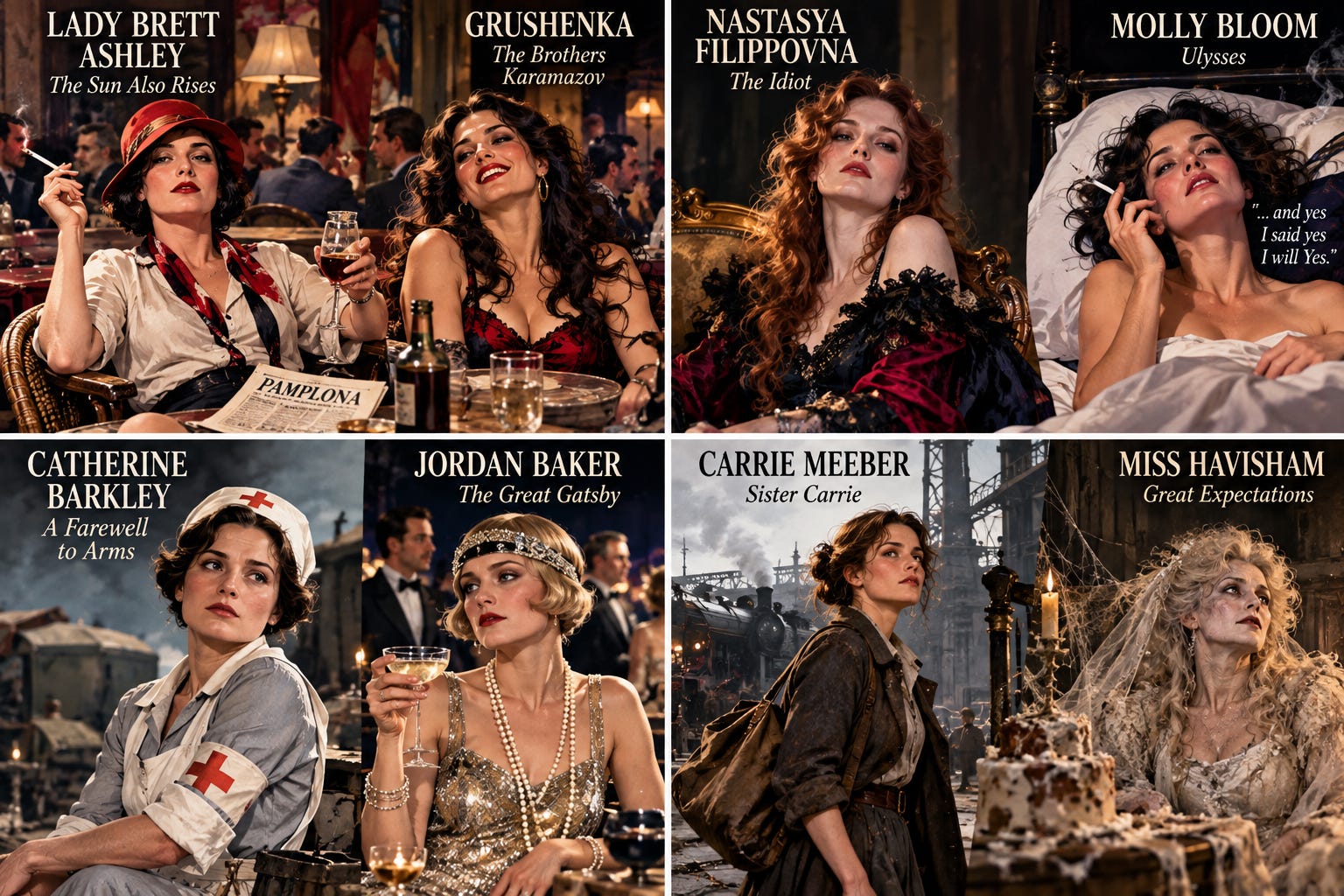
Millions of men have also read the stories of Catherine Earnshaw in Wuthering Heights, Scout Finch in To Kill a Mockingbird, and Elizabeth Bennet in Pride and Prejudice. These weren’t necessarily “heroic women.” Some were vain, selfish, destructive, foolish, brave, brilliant, cruel, loving, funny, or completely insane. That was precisely the point. They were characters. They were interesting. And their authors did not go out of their way to repulse or alienate male readers.
The usual excuse—that men simply will not read about female protagonists—is bullshit. Cornell researchers recently recruited nearly 3,000 readers and randomly changed the pronouns in otherwise identical stories. The research showed that men were just as likely to continue reading when the protagonist was female as when the protagonist was male. Women, on the other hand, showed a preference for the female protagonist.
This rather ruins the usual alibi that men won’t read about female characters. There may, however, be somewhat less male enthusiasm for the coming-out story of a 16-year-old Catholic lesbian.
Neither have men historically put books down simply because they disagreed with an author’s politics. My conservative father recommended John Dos Passos and Sinclair Lewis to me. Steinbeck was widely read by conservative and liberal men alike despite his politics. Many of the major writers of the mid-20th century leaned left—another kind of publishing conformity, perhaps—but writers such as Faulkner, Mailer, Vonnegut, Salinger, Kerouac, and Cormac McCarthy at least wrote books that engaged with the male experience. There was danger, competition, lust, loyalty, war, humiliation, friendship, fathers, and both glorious and pointless death.
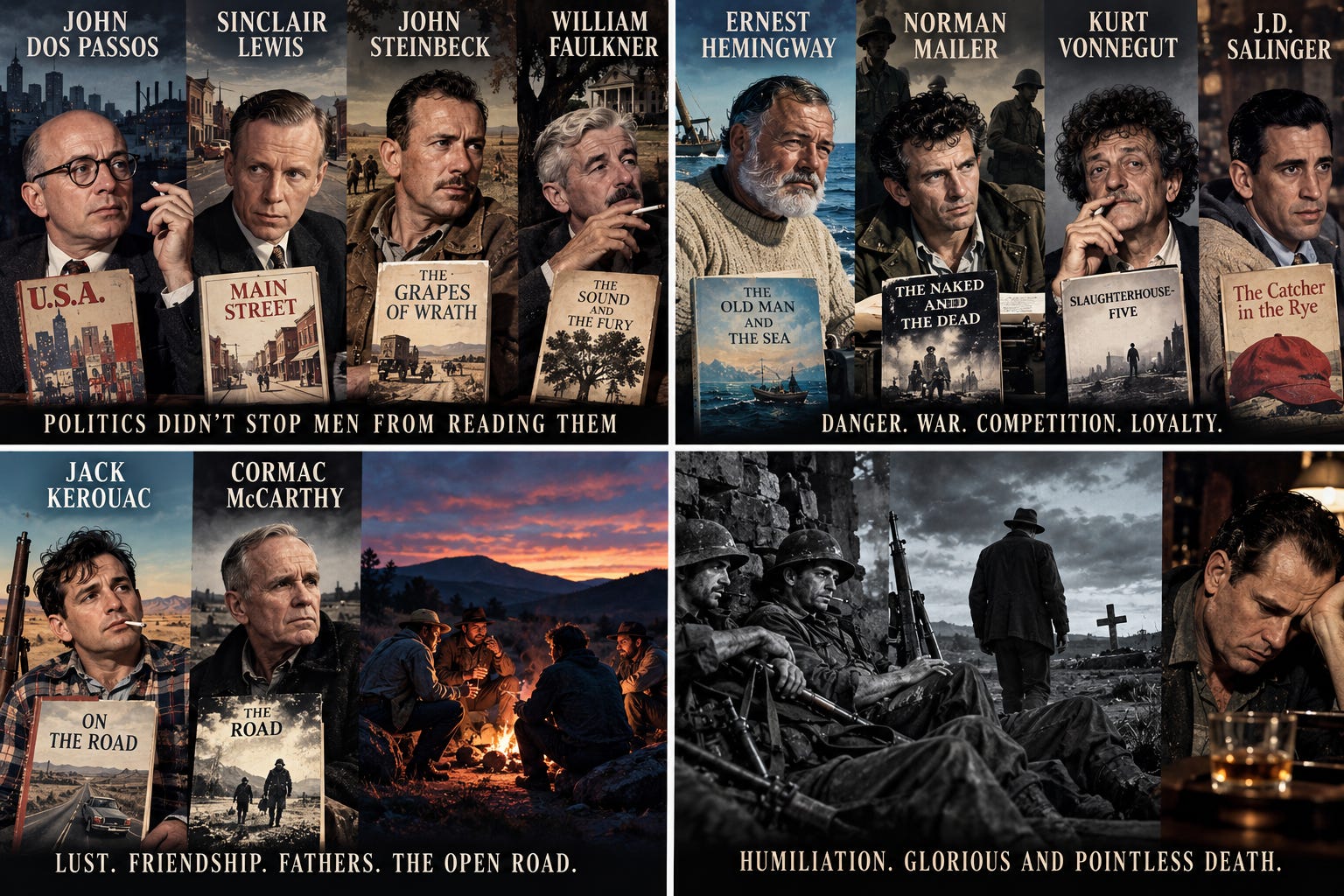
Men don’t have to agree with the politics of an author to appreciate the author’s craft. Music is much the same. Plenty of conservative men have no problem listening to the Beatles even if they have no intention of adopting Paul McCartney’s vegetarianism or John Lennon’s politics. Yet the publishing world remains shocked by the fact that men don’t want to read fiction that bears almost no relationship to the male experience, produced by an industry in which male voices have become increasingly scarce.
Male characters sometimes seem to appear in contemporary women’s fiction primarily as representatives of a particular pathology, complete with a note from Human Resources. The publishing world could respond to the disappearance of male readers by asking whether the product itself has become too narrow. But instead of figuring out how to broaden the audience—and perhaps becoming a little more equitable toward male authors deserving of publication—it would apparently prefer to populate think tanks and panel discussions designed to study the subject.
And, true to form, these discussions often conclude that the flaw lies not with a one-sided publishing industry but with the shallowness of readers who simply don’t care as much as they should about Melody’s roommate, Margaret’s inherited trauma, or Nora’s bad marriage to Todd.
Men aren’t going to read trash that doesn’t appeal to them. But they will read history, biography, philosophy, and science fiction. They might read about a long-vanquished civilization or pick up a biography of Ty Cobb. They might spend 30 hours listening to a podcast about the Roman Empire. They may be reading about the Goths, Napoleon, or the fall of the Persian Empire. Men are not only capable of reading, they like to read. We just hate bad fiction.
It we find ourselves trapped inside Barnes & Noble, we are likely to cover their eyes as we pass the front displays and push our way toward the History or Philosophy section. American fiction has become a sea of political and therapeutic preoccupations produced by an industry that has pushed many male voices to the fringe of the business and then seems genuinely surprised that the male readers followed them out the door.
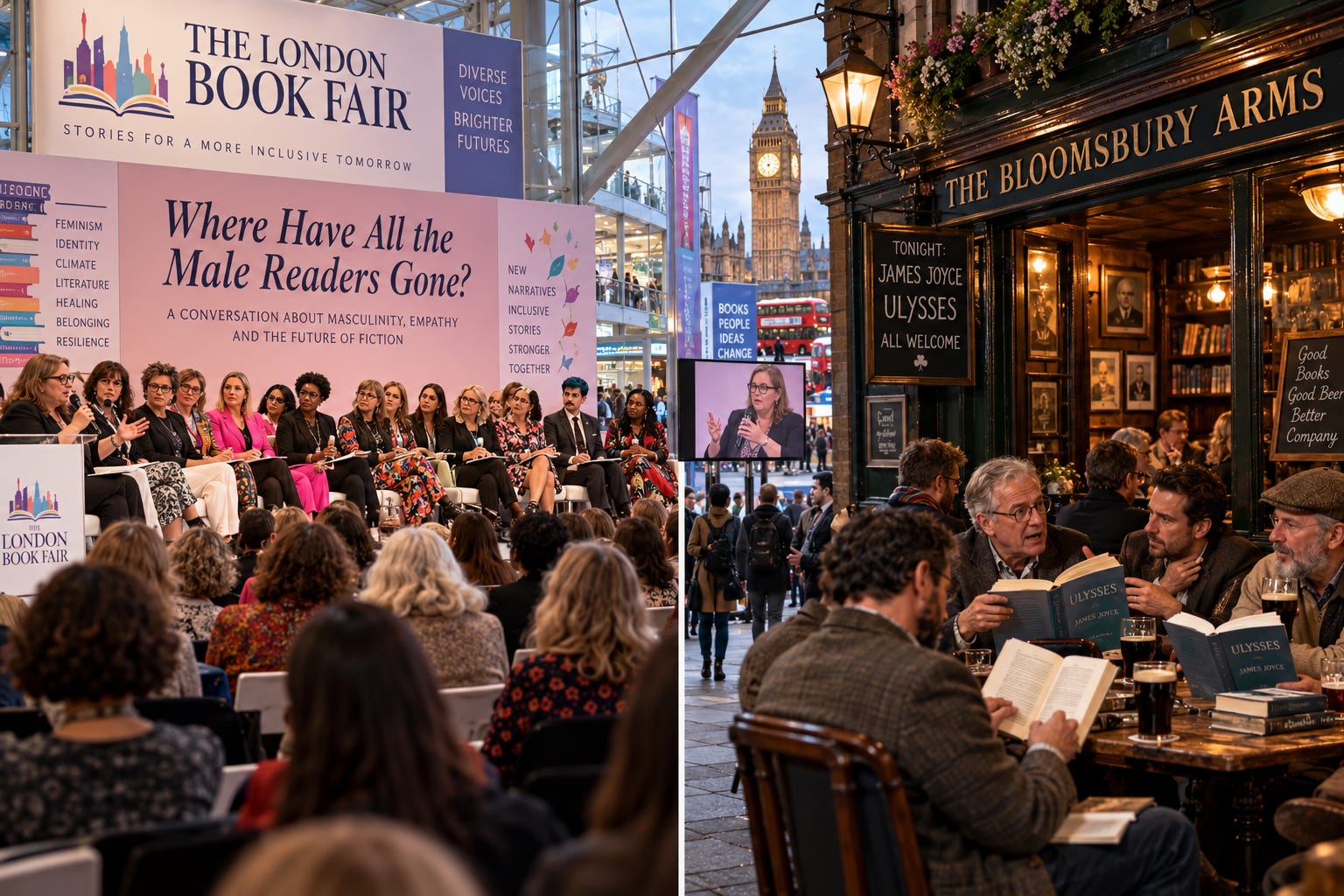
Meanwhile, somewhere at the London Book Fair, a panel discussion is convening under the title, “Where Have All the Male Readers Gone?” Thirteen of the fourteen panelists are women. The fourteenth is a transgender man who has complicated feelings about his father. The moderator has just finished explaining that men probably lack the emotional vocabulary required for contemporary fiction.
Nobody has thought to walk across the street to a pub and ask an actual male why they stopped reading fiction. But don’t worry. They’ll get to the bottom of it.
I read. A lot. Gag at the selection at chapters. Kinda like pottery barn with bodice rippers. Seriously wish there was a way to start a bookstore called dirty white boys. No females allowed. Serious selection of fiction, how to books, military, naval seamanship, camping, mountain climbing, motorcycle repairs, etc. Proper selection of firearms prohibited here in Canuckistan for sale. Gun range behind soundproof glass you can watch from the pub while munching shrimp tacos. Medieval Italian swordfighting school upstairs. Reading room for members with wingback chairs. Pipe smoking and good whiskey encouraged. Dress sharp. Boxing lessons and Saturday night sparring. No cell phone or tablet allowed.
Longsword
I am a woman and I do not read current fiction of the kind you describe. I am also nauseated.