
That Same Thing
A Night when the Country Forgot How to Hate

On April 24th, 1969, the Joy-Scout Super Jam at the Auditorium Theater to benefit the Phoenix Academy took place, with an all-star cast of Muddy Waters, members of the Paul Butterfield Blues Band and as well as Donald Duck Dunn, of Booker T. & the MGs fame, and immortals such as Sam Lay, Otis Spann, Buddy Miles and James Cotton. The first two sets were led by the Ace of Cups, an all-female band, as well as the famous San Francisco Band, Quicksilver Messenger Service. But the last act, was led by the great Muddy Waters and his all star band of Michael Bloomfield, Paul Butterfield, Otis Spann, James Cotton, Buddy Miles, Duck Dunn and Sam Lay. This final set recorded at a benefit concert for a Chicago Public Military Academy is by common consent, one of the greatest blues sets ever recorded.
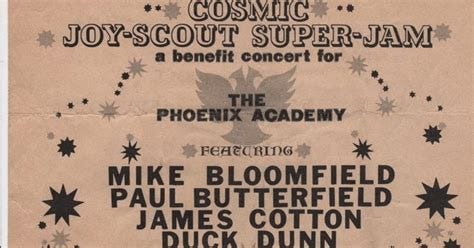
April 1969 was more than a half century ago. But there were real parallels to now. It was about a year after the MLK riots that turned Chicago’s West Side into a battle zone. It was just five years after the passage of the Civil Rights Act of 1964. The country’s major cities were divided between black and white, rich and poor, much like they are today. But there was a hopefulness then that doesn’t seem to exist now. The great Civil Rights Leader, Martin Luther King, named after the great religious reformer that shared his name, did not espouse racism and longed for a society where people were judged by the content of their character and not the color of their skin. King did not hate white people, and he preached a message of tolerance and forgiveness. He would have had no respect for the dividers of today who contrary to his message do in fact judge people by the color of their skin and not the content of their character. King saw this kind of attitude as self-defeating and self-destructive.
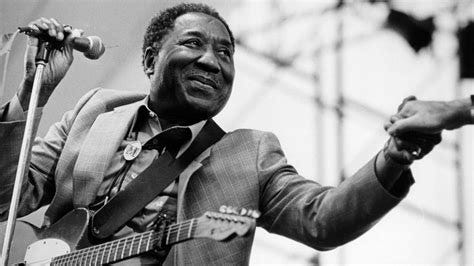
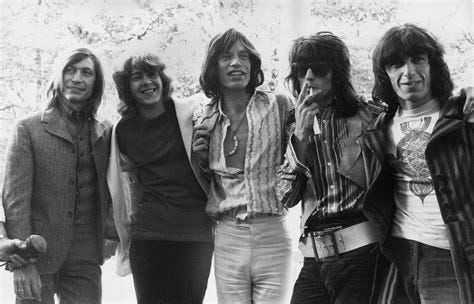
In the midst of this chaos, stood the unlikely heroic figure of Muddy Waters. Muddy was nicknamed by his grandmother because as a child he liked to play in the muddy water of Deer Creek near his home in Mississippi as a child. Muddy was a child of the plantation near Clarksdale. He lost his mother when very young and was raised by his grandmother, learning to play the guitar and harmonica. His musical heroes were Robert Johnson of “Crossroads” fame and Son House, and the blues became such an obsession that in 1943 he moved to Chicago to become a full-time musician. The pivotal moment in the history of modern music came in 1954 when Muddy Waters “plugged in” his guitar in a crowded nightclub and created the electrified sound of “Chicago Blues.” This was the sound hear around the world, and especially so in England where two working class lads from London formed a band called “The Rolling Stones” named after the famous song by Muddy Waters, ‘Rolling Stone.” Ten years before the Civil Rights Act was passed, a country kid from backwater Mississippi tore the racial barrier to shreds not through polemic or politics, but through singing songs that were at the very core of what it means to be human: overcoming suffering.
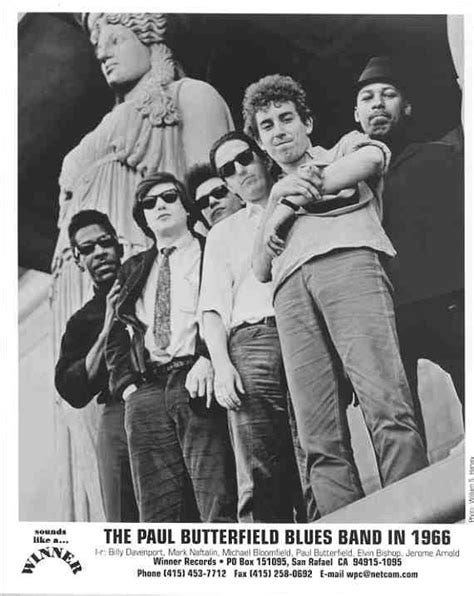
Fifteen years later, Muddy Waters now the elder statesman, led an international movement that crossed racial barriers and inspired generations of American and British musicians and literally changed the world. Without Muddy Waters, there was no Beatles, no Rolling Stones, no Jimi Hendrix, no Eric Clapton, and the 60’s are not even recognizable. With Muddy on that night in April 1969 at the Auditorium Theater in Chicago were a couple of Jewish kids from Hyde Park and the North Shore, Paul Butterfield and Mike Bloomfield, both who left everything to follow Muddy the way that St. Peter and St. Paul followed Christ. Also on stage was Donald Duck Dunn, the white kid from Memphis who spent his life playing behind black musicians like Booker T., Sam and Dave and Muddy Waters. Around the same time, Miles Davis, the influential jazz leader, began to integrate his band and take in white musicians such as Joe Zawinul and John McLaughlin, and it was becoming apparent that music was the language that everyone spoke and the corridor that one slipped behind where race disappeared. The concert halls and clubs became integrated with people of all races and colors, who shared their love of the music and more importantly, the spiritual power that was behind it.
That is what we hear when we still listen to that recording of “Fathers and Sons”, one of the seminal albums in music history. Of the literally hundreds of times I have listened to this recording, the most captivating moment still comes when the great Muddy Waters slows down the set to sing the haunting piece, “The Same Thing.” Muddy takes his piece, which is a parable about the spell women cast on men, and recasts it in the atmosphere of the Vietnam and the Civil War gripping the country. “Oh that same thing.. Oh that same thing…Tell me who is to blame, the whole world fighting about that same thing….have mercy….” As Paul Butterfield’s harmonic wails and Otis Spann’s piano rolls, we hear the sighs of Mike Bloomfield’s guitar and we know that Muddy has reduced the world’s problems to the human flaw in all of us, and to a call for mercy and forgiveness. We can visualize the captivated audience with their heads bowed in shame as the great prophet of blues tells this sad story.
Yet, there was something hopeful in all of this. An inter-racial band on stage together, playing behind this prophet of Chicago Blues, in front of an inter-racial audience at the height of inter-racial tensions….and the pure jubilation that follows as the concert ends with “Got my Mojo Working”, a recording that could melt the heart of the devil himself. As the concert ends, and the announcer says, “Muddy Waters….and some of his old friends….” one can feel the hope that was in that room on that night. Muddy’s powerful voice has spoken simple truths and common sense, and those who could hear him had their lives changed forever.
I have listened to this recording for thirty or more years and….. as his voice grows more distant, I long for the past and for those simple truths that were spoken by this child of the Delta that are nowhere spoken today. I long more than anything for the preachers of that time, such as him, who would bring us together by making us feel the joy and pain of life and through that making us realize that we are all sinners and tempted by that same thing.
That was lovely.
I'm a Gen X possum; I don't recognize what has become of music, entertainment, life.... Like many of my cohort, I was a big fan of ska and reggae, and have a two tone tattoo from sometime in the 80s....
We no longer have the same spirit, half the country absolutely hates the other half. My sister still won't speak to me until I agree that men can get pregnant. It was never this bad in the 60's.